Scorched Earth, Seeds, and Strength
Takeaways from the ecological recovery of the San Gabriel mountains following the Eaton Fire in Altadena, California

Thank you to Cards Against Humanity (CAH) for supporting my academic journey, as well as for the opportunity to promote accessible science education. Additionally, thank you to executives at Stellate Communications for the brilliant guidance and feedback that shaped this article.
In January of 2025, I lost my home in the Eaton Fire. Your mentorship has made it possible for me to tell my story.
Scorched earth
There’s a ladybug asleep in my bed.
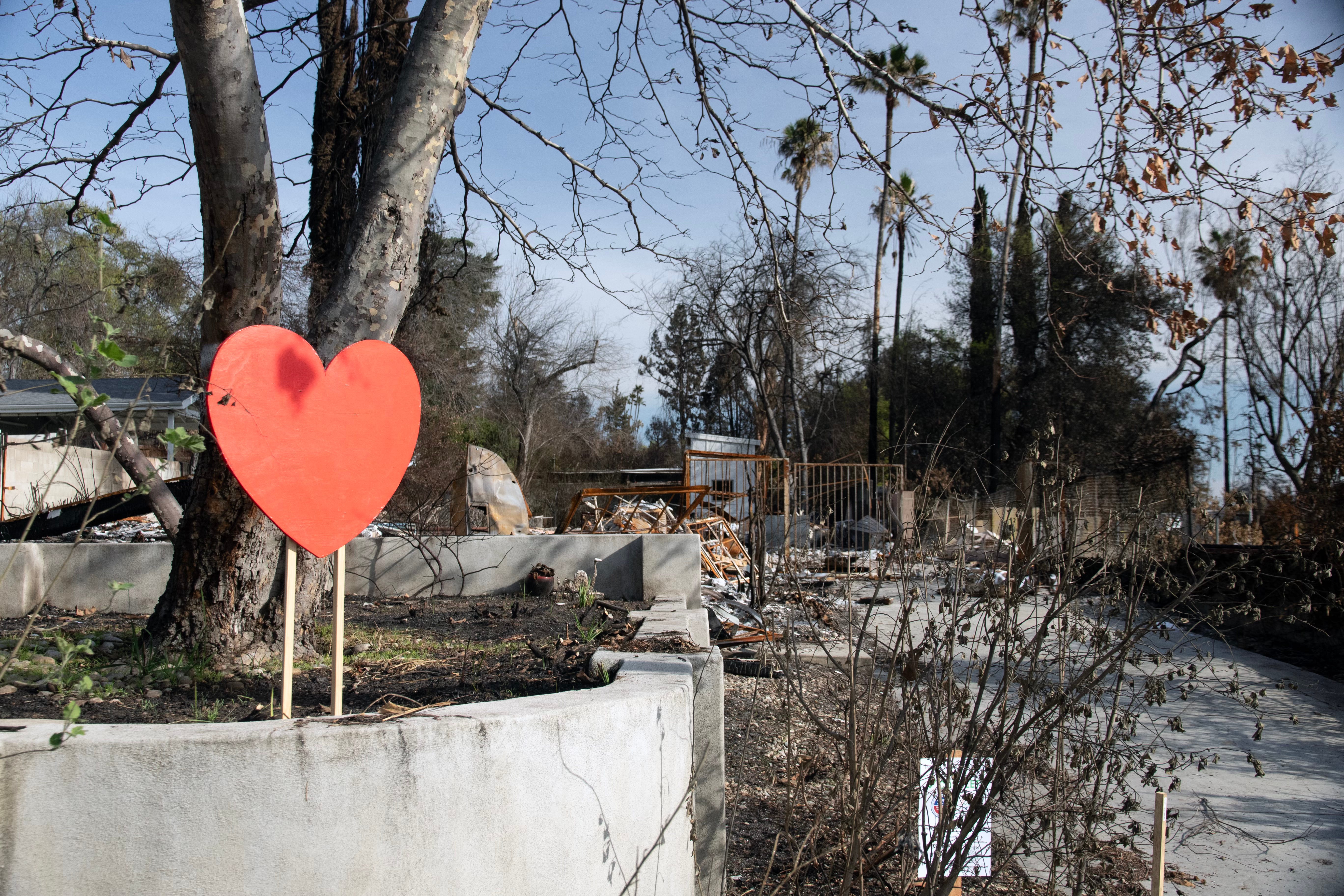
Or, at least, where my bed used to be. I remember rolling my eyes and laughing, quietly—I didn’t want to wake the sleeping beauty. To my right was a half-crumbled wall, bearing the scars of flame up its front. To my left, a blackened oak and a once-flourishing pile of sage brambles. The scorched earth below us–up until this January, the bed where I’d found solace each night for twelve years–reeked faintly of ash. You had to be careful on the inhale.
But the ladybug was wholly at peace, nestled gracefully between the dewy filaments of a plant no larger than my hand. The plant, like dozens of others that dotted my now bare quarter-acre lot, made a surprise appearance after the fire.
This was a slice of heaven in the mouth of the apocalypse. To me, it was hope: I couldn’t sleep here anymore, but something beautiful still could.
When your house burns down, nobody tells you about moments like these. Peeking through the twenty-pound pile of paperwork, dread, and sobering realizations, it’s the tiny things that stick with you: the ladybug, the text from a friend who’d sunk to the bottom of your messages, the smell of buckwheat after rain. Suddenly, you’re home again.
For the unincorporated community of Altadena, California, home is a haven where horses and their cowboys trot alongside cars. Sidewalks are optional, and we don’t need much beyond the Rite-Aid on the main boulevard.
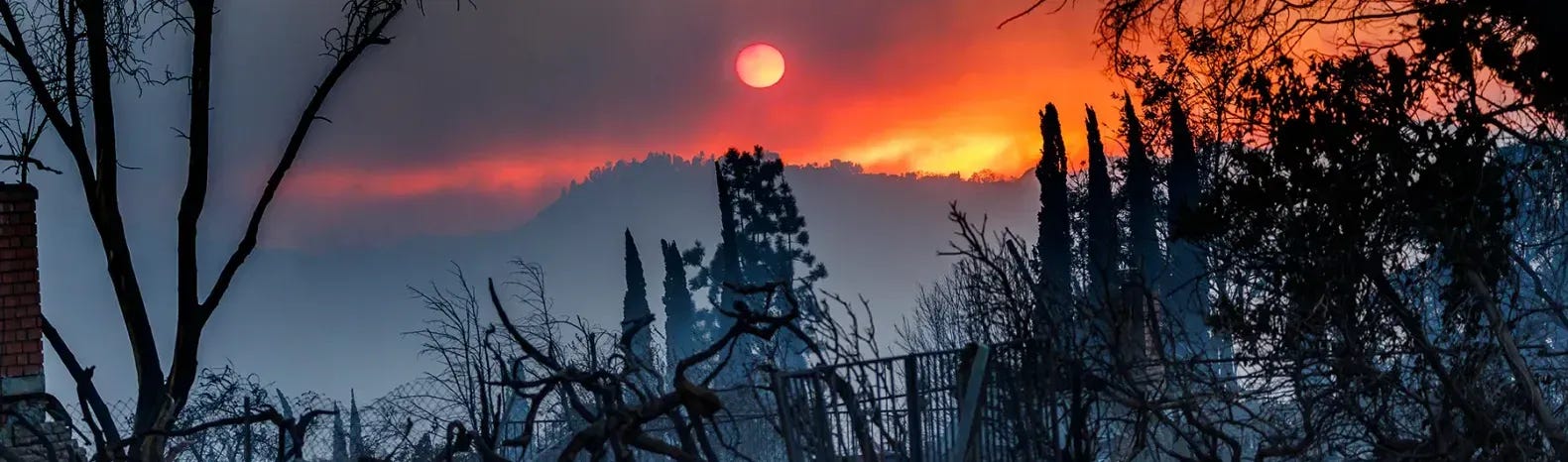
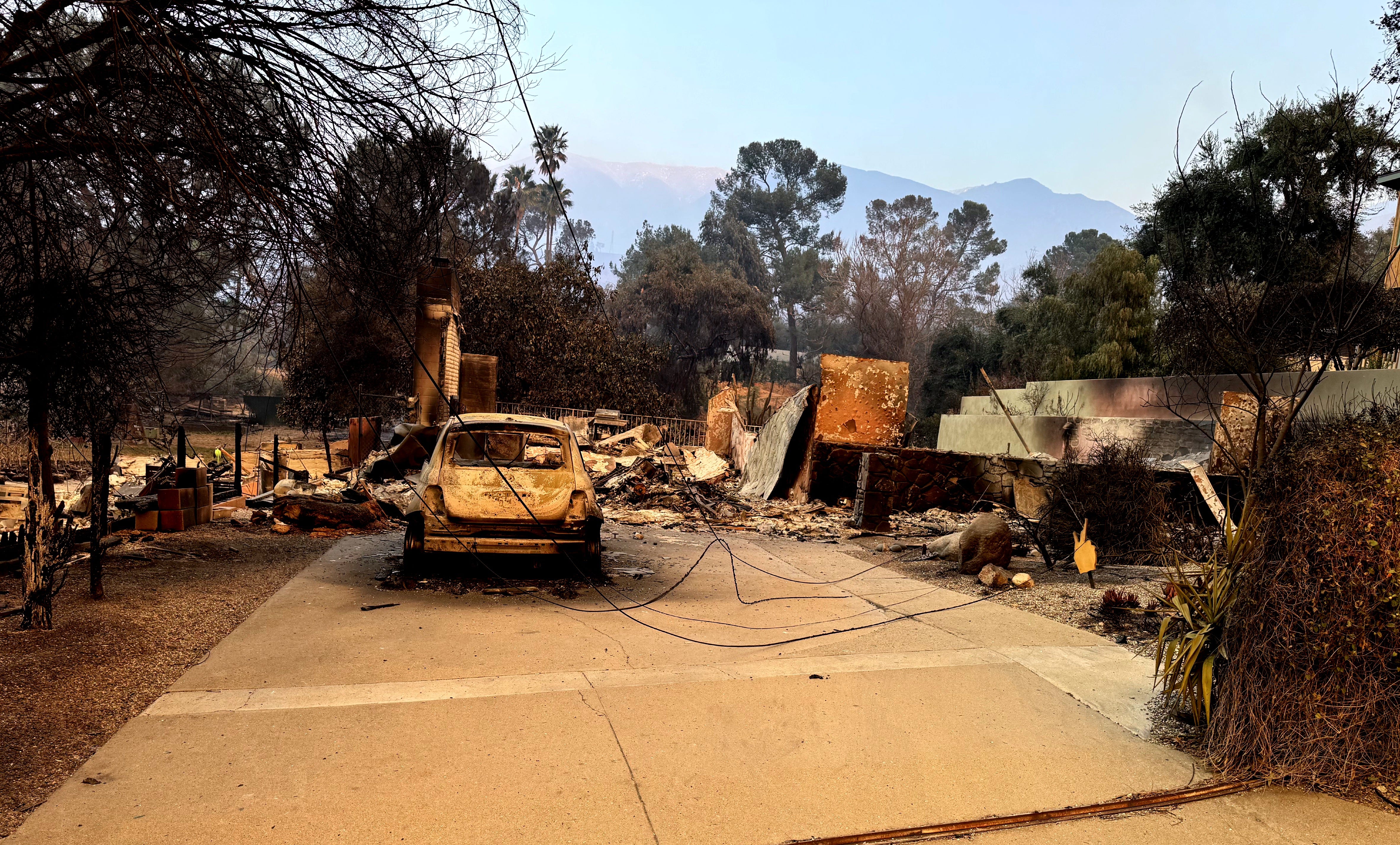
On January 7th, 2025, much of that haven was destroyed. The Eaton Fire began in the canyon, the result of a power-line explosion. It came in the midst of a record-dry winter for most of Southern California [1] and an exceptionally windy afternoon.
I watched the cowboys rush their horses down my street that night. By the morning, the Rite Aid was among the only structures standing. 14,021 acres, lost. While much of that area was urban–homes like mine–over half of the area consumed by the fire was unbuilt ecological landscape [2].
That unbuilt area–that “wild”–is what draws me to this page.
The wild side
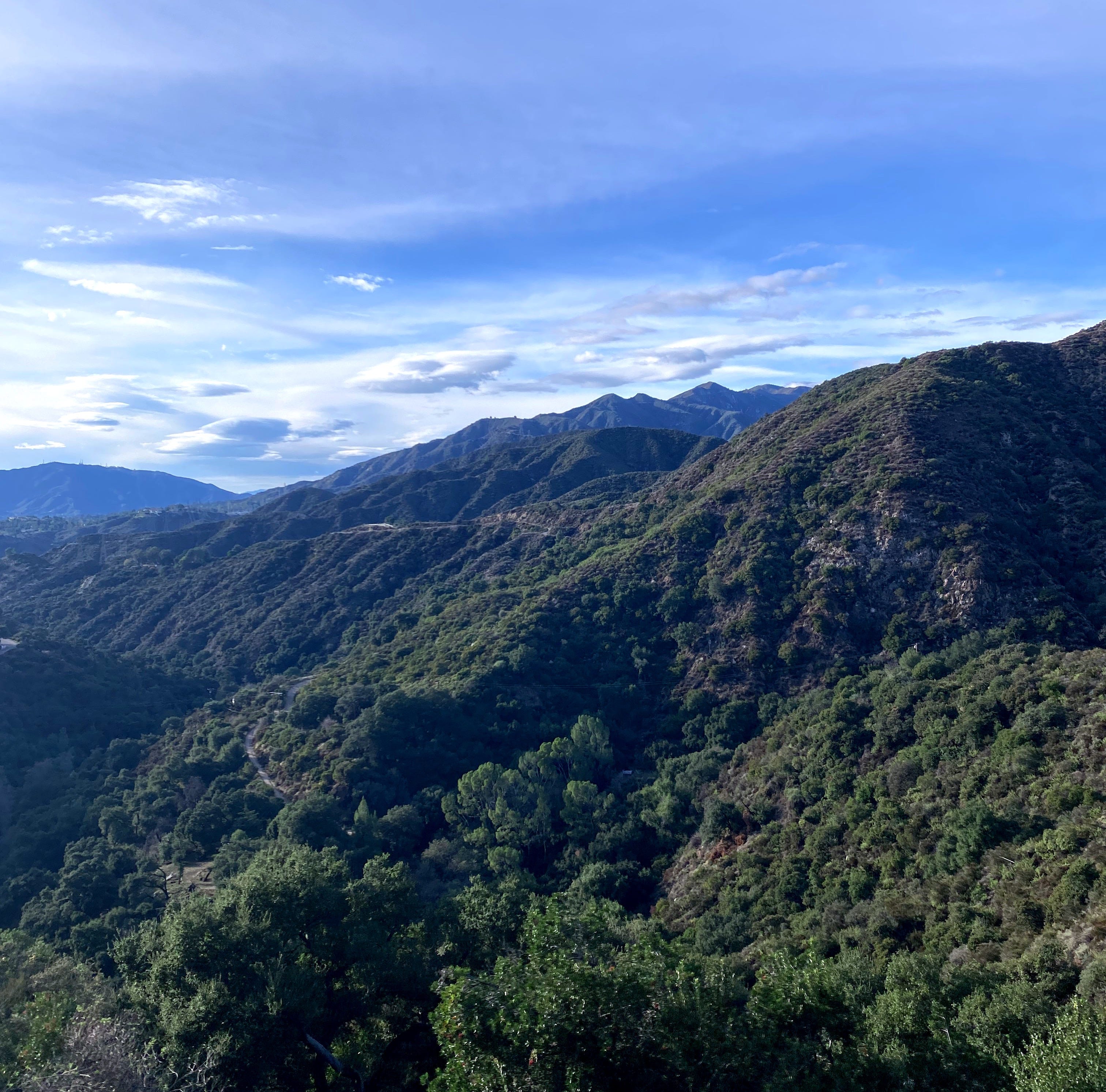
On wheels, Altadena is a half-hour northeast of Los Angeles. On foot, it’s a short walk into the San Gabriel Mountains, home to a unique and well-researched ecosystem that comprises the Angeles National Forest.
Living with a decadent mountainside next door works wonders on anyone. It’s inevitable. Though most Altadeneans are certainly not textbook tree-huggers, the nearness to wild land creates a distinct sense of coexistence—an unspoken understanding of give-and-take between land, its non-human residents, and its human stewards.
In the months since the fire, the vast majority of us have scattered across greater Los Angeles. I’ve witnessed my community mourn the loss of the “wild” of Altadena nearly as much as our brick-and-mortar homes. There’s a San Gabriel-shaped hole in my heart, and I’m not the only one.
Undercutting this sense of loss, however, there’s a consensus among those of us displaced: watching the wild landscape spring back to life in the months following the fire infuses us with resilience. From the ladybugs to the mountains, if the ecosystems we revere can bloom again so proudly, so can our community.
How did nature make its comeback? As someone with a vested interest in ecology, this question has pulled at me.
As with any true mystery investigation, I think it’s important to start with the basics: who, what, where, when, why, and how?
The organism-level of Altadena can be understood within the context of the ecological-level, where: distinct groups of plants that tend to stick together to form habitats (think cactuses buddying up with dry, prickly tumbleweeds; or redwoods flocking to ferns and large mushrooms). Our slice of the San Gabriels is home to not one, but five ecological plant communities: coastal sage scrub, chaparral, riparian woodland, alluvial scrub, and southern oak woodland [3]. Coastal sage scrub is Southern California’s take on grasslands–tall, drought-tolerant spiny bushes; chaparral is the somewhat woodier alternative to the sage scrub; riparian woodland consists of the verified “trees” that straddle each river; alluvial scrub spans across our driest basins in patches of short, prickly bushes; southern oak woodland provides our version of a canopy, a shady maze of towering hundred-year oaks.
These systems don’t operate too differently from human communities: each may occupy a slightly different habitat (dryness, warmth, proximity to the ocean), but like people, organisms within these distinctions can exist in multiple communities at once. An individual plant may serve a particular role in the chaparral ecosystem and an entirely different role in the riparian habitat. This variety–in species, microlandscapes, and interactions–forms an ecologically advantageous superweb that strengthens the ecosystem as a whole. Like human cities, natural habitats work best when they embrace the many identities within their borders.
That superweb between five communities makes the perfect habitat for the who’s-who, some of Altadena’s most beloved wildlife: the coyote that every Altadenan has narrowly avoided with their car, the fierce bobcat and mountain lion that put chicken-owners on edge, the awkward American black bear that’s only ever seen nose-deep in a trash can, and the ominous, ever-circling turkey vulture.
But wildlife in the San Gabriels extends far beyond the fan favorites. Smaller species are rapidly losing habitat due to encroaching development that disrupts their plant communities and record-high fire risk, which produces disasters like the Eaton Fire. Despite these environmental pressures, the endangered Crotch’s Bumble Bee and the Southern California Shoulderband Snail have both found a safe haven in the Altadena foothills [3].
So what is Altadena’s secret? What do our mountains have that wooes such a breadth of impressive organisms?
As it turns out, I had discovered the answer to this question at six years old.
To me, the rare San Gabriel oak tree was just a way to pass the time on a hot day. While my parents trudged ahead along the hot and dusty trail, I remember lingering behind under the shade of this small, leathery tree, marveling at the way my thumb fit perfectly within its scratchy leaves. I may not have known what I was standing under, but I knew it was something important.
And it was: Altadena’s flora are just as unique as the fauna they serve, and this San Gabriel oak is the textbook example of this highly specified relationship. The San Gabriel oak appears in fleeting numbers across a sliver of the San Gabriel mountains. They’re a bona-fide rarity, and yet: they’ve taken naturally to Altadena’s foothills [3].
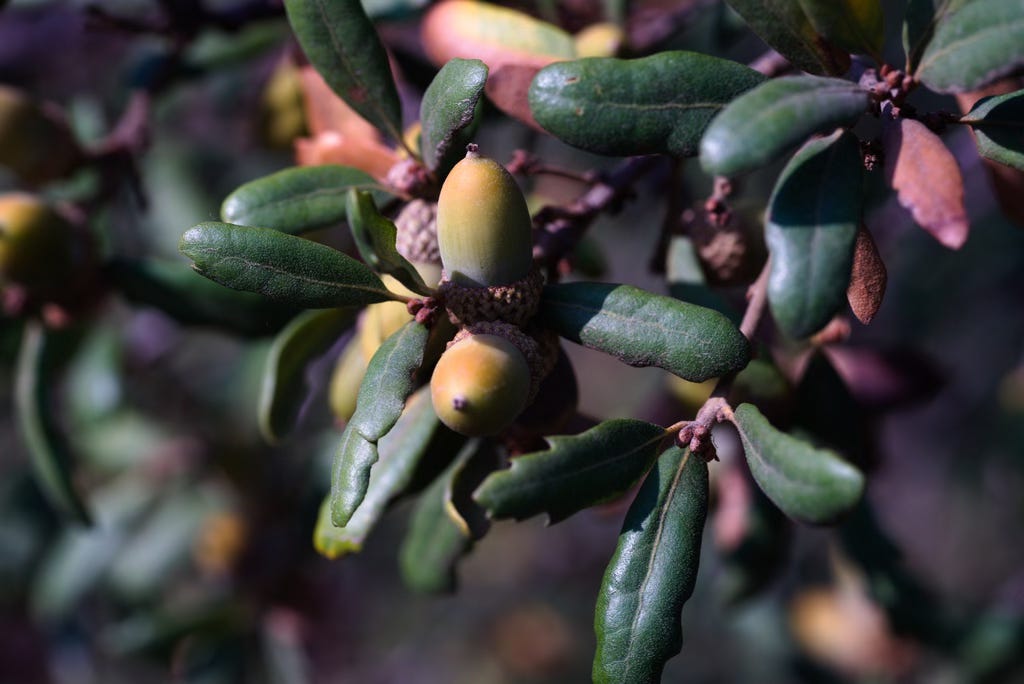
And the San Gabriel oak isn’t the only one: the Engelmann’s Oak, among the most restricted species of oak on Earth, has similarly found a lifetime refuge in Altadena. Not only do both these treasures of the oak world inhabit Altadena, but they’re setting down roots in unique ways, intertwining with similar oak varieties at an unprecedented rate. Some of these hybridizations have been reported less than 100 times, and yet coexist comfortably in Altadena’s humble hills [4], providing shade for clueless kindergarteners like me.
Altadena’s share of the San Gabriels is a centuries-old, decadent melting-pot of some of the most restricted oak trees in the world.
It’s clear that these foothills are an ecological gem. But the Eaton Fire introduced a burning question: after a total wipeout, what will become of this flourishing foothill community? When can it reach the level of biodiversity it once had, if ever?
Yes, the Eaton Fire was the harkener of death for the lush, olive-green hues and vibrant paint palette that colored Altadena’s hills. But since the flames reduced mighty trees to blackened stumps on January 7th, over half of Altadena’s species have made a comeback [5].
How?
Life begins in the soil
Fire is a buzzcut - when everything else is trimmed away, a base layer remains.
That base layer is much more than a bare expanse. Far below the scorched surface, the building blocks of regrowth - precious organic matter and vital nutrients - are preserved [7]. A natural bunker, ready to emerge and fuel the regrowth of its landscape.
Like those underground nutrient wells, there are underlying resources that hold our human communities together. These bonds - shared experiences between neighbors, restaurant staff and their regulars, families of an elementary school classroom - are some of the most steadfast and rewarding relationships that exist between people, and I’ve seen firsthand how they act as a springboard for their community following a disaster. Like many Altadeneans who were displaced to unfamiliar areas, I’ve relied on these invisible threads each day to connect me to Altadena. Even as our physical shelters have been destroyed, we can find solace —a sense of home —in the fabric of our community, something that can outlive any natural disaster.
But in nature, tapping into these underground networks isn’t instant. Before the emerging ecosystem can access the soil’s stowed provisions, the resources must be made bioavailable.
Enter pyronema: the fungal first responder of the natural world [8].
In the days following the fire, the “fire-following fungi” emerged from Altadena’s blackened ground, already working overtime to make the soil’s stowed provisions available for the rest of the ecosystem.
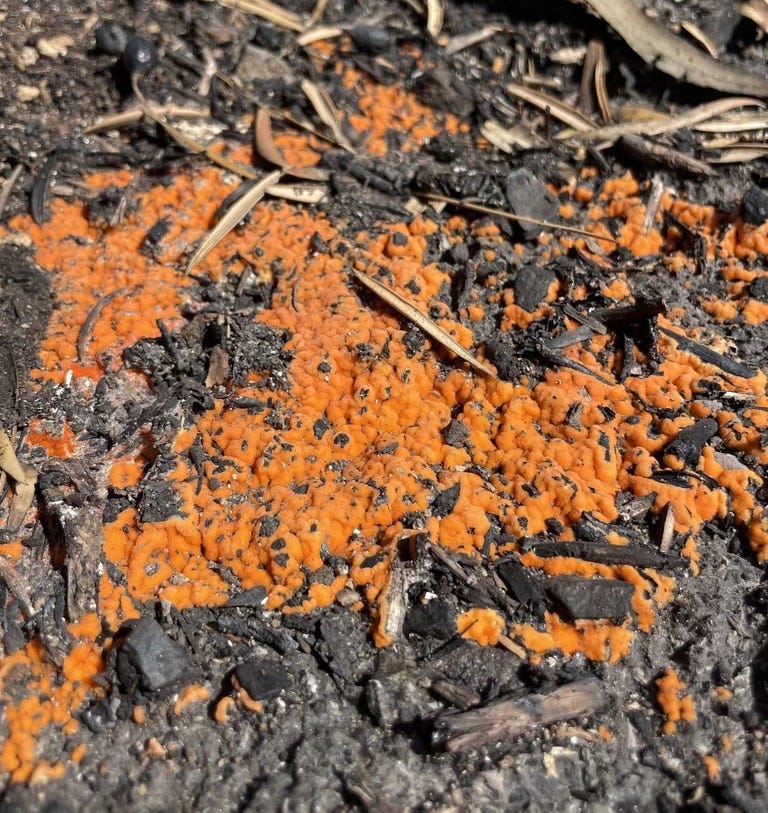
The fungi’s restorative abilities come down to complex chemistry. Pyronema secretes enzymes that decompose the toxins found in soil - namely charcoal, PCBs, and hydrocarbons - and convert them to bioavailable carbon, water, and vital minerals. The root systems of these fungi also intertwine in webs below the surface, a sort of underground carpet that holds the soil firmly in place, sheltering plants from mudslides and nursing the earth back to life. So just as firefighters, sheriffs, paramedics, and thousands of community volunteers make it possible for families like mine to find their footing after the fire, pyronema provides vital resources for the first seedlings to latch onto.
Nothing short of formidable fungi.
Pyronema extends support far beyond the plant community. By cleansing the soil, the fungi restore its filter-like properties. This is crucial to the residents of Los Angeles County, a whopping 30% of whom use water from the San Gabriels - that’s 2.9 million people who are dependent on proper soil filtration [9]. If you think that human society can thrive without these natural systems functioning at full capacity, think again.
For some, the restored soil is prime real estate. Habitat-flexible insects—including the notorious termite—can lay their eggs directly in the ground [7], which offers a head-start on re-establishing their numbers. The vast majority of insects, however, rely on the presence of local vegetation to start the road to repopulation.
If this sounds familiar, it’s because the same dynamic exists in our society. Resources aren’t even across the board, and there’s nothing like a natural disaster to magnify those disparities. I lived it: while many of my neighbors were forced into a foreseeable future of couch-surfing, a fortunate few retreated to summer houses in remote locations.
And stumbling through that ever-growing pile of insurance paperwork? Navigating the hundreds of phone calls with Agency A-Z? The maze of red tape? It’s a full-time job; time that the vast majority of Altadeneans don’t have to spare. I watched elderly folk crumble under the technological proficiency that this work demanded, watched non-English speakers jump through an additional thousand hoops.
The vast majority of us need that leg up—need a leaf or two to latch onto.
These “pioneer” plants—the very first to burst through the ashes—are different for each plant community. Altadena, being home to several plant communities mentioned earlier, hosts a few key players.
The centerpiece of the coastal sage scrub community is deerweed [10], a messy shrub with red-hot tips that stretch out like flames. Deerweed isn’t just a pretty face, though: this “nitrogen fixer” collects atmospheric nitrogen, which is entirely useless to plants, and converts it into digestible ammonium and nitrate. Then, deerweed performs an act of kindness: it shares the wealth, sending care packages of useful nitrogen to every plant in its reach.
Closest to my heart is a pioneer called chamise. In the spring, the tall bush reaches to embrace you with white blossoms. I’ve always thought it looked like a cloud, swaying gently in the breeze. Chamise is so central to the balance of the San Gabriel ecosystem [11] that the Altadena foothills are often described as “chamise chaparral”—in other words, they revolve around this gentle giant.
These pioneers all have something in common: they work best under pressure.
Researchers have found, time and time again, that pioneers reseed, grow, and thrive with the most success in areas that frequently burn. These trailblazers of ecological recovery, the plants most integral to their respective plant communities, are prepared for fire.
Resilience by design.
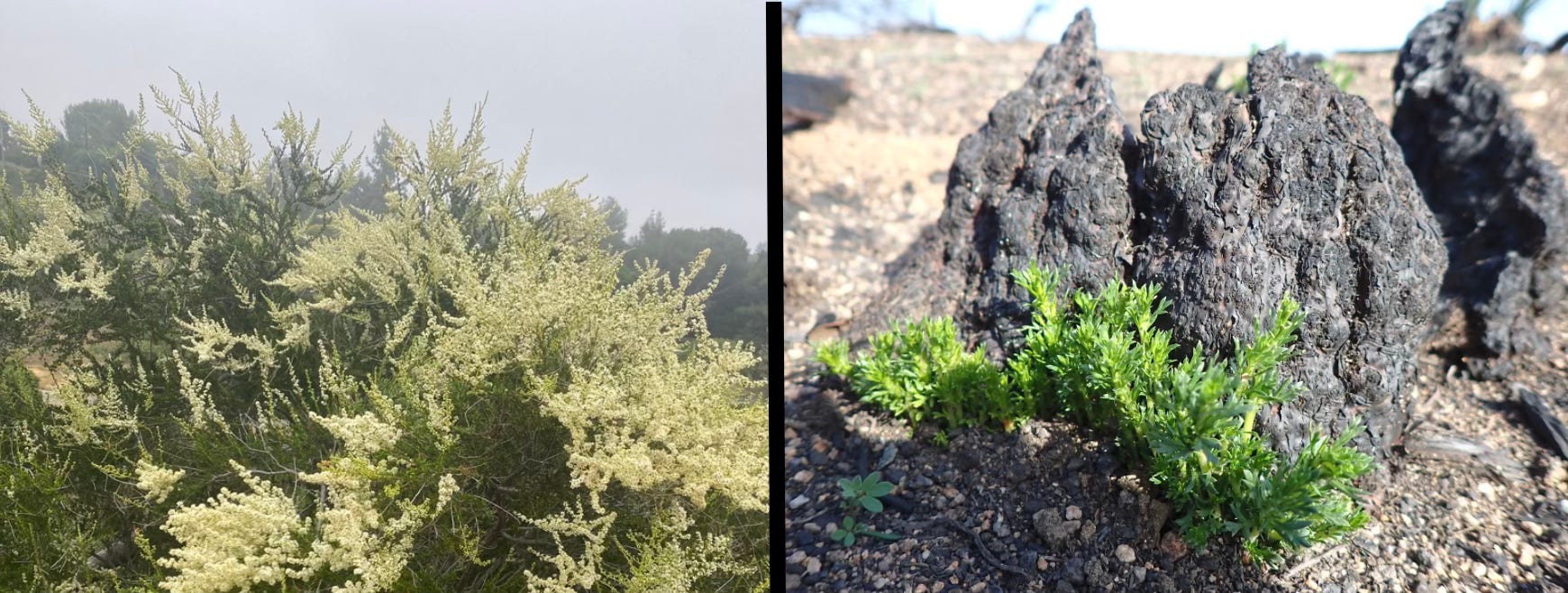
Once they’re back, the pioneers usher in the insect community. Deerweed is frequented by ants, native bees, and a slew of butterflies, while chamise is a place of refuge for the highly specialized —and very hard to spot—“walking stick” insect.
If the chamise couldn’t re-emerge, the walking stick would be completely at a loss. Similarly, ensuring that every one of the groups that serve our communities —churches, identity-based groups, schools—has the resources to reestablish and continue their work is key to the reconstruction of human communities.
Resilience in parallel
Being a nature-lover throughout this process has allowed me a unique window into a two-sided, parallel journey of recovery. Here’s what I’ve seen: just as the larger animals have begun to make their way back into Altadena, displaced families have made our recoveries in similar milestones.
One month after the fire, I caught the beginning of this dual return during a visit to my home. I’d prepared myself for a barren lot, remnants of a chimney—maybe a weed or two.
What I hadn’t expected was the birdsong.
Juxtaposing the utter lack of foliage, the winged regulars flitted between dead branches and across the open yard.
Fitting: right as Altadena and Pasadena students set foot in their classrooms again, the birds were back in business.
At four months, scientists with the Chaney Trail Corridor Project spotted a Big Brown Bat, a species known for its hyper-reliance on steady sources of habitat and food. Finding the bat signaled that the ecosystem had reached a state stable enough to support larger fauna. It was around this time that many Altadeneans reached some semblance of normalcy in their lives, as well: moving into more permanent rental units or even homes, we’d started to find our footing.
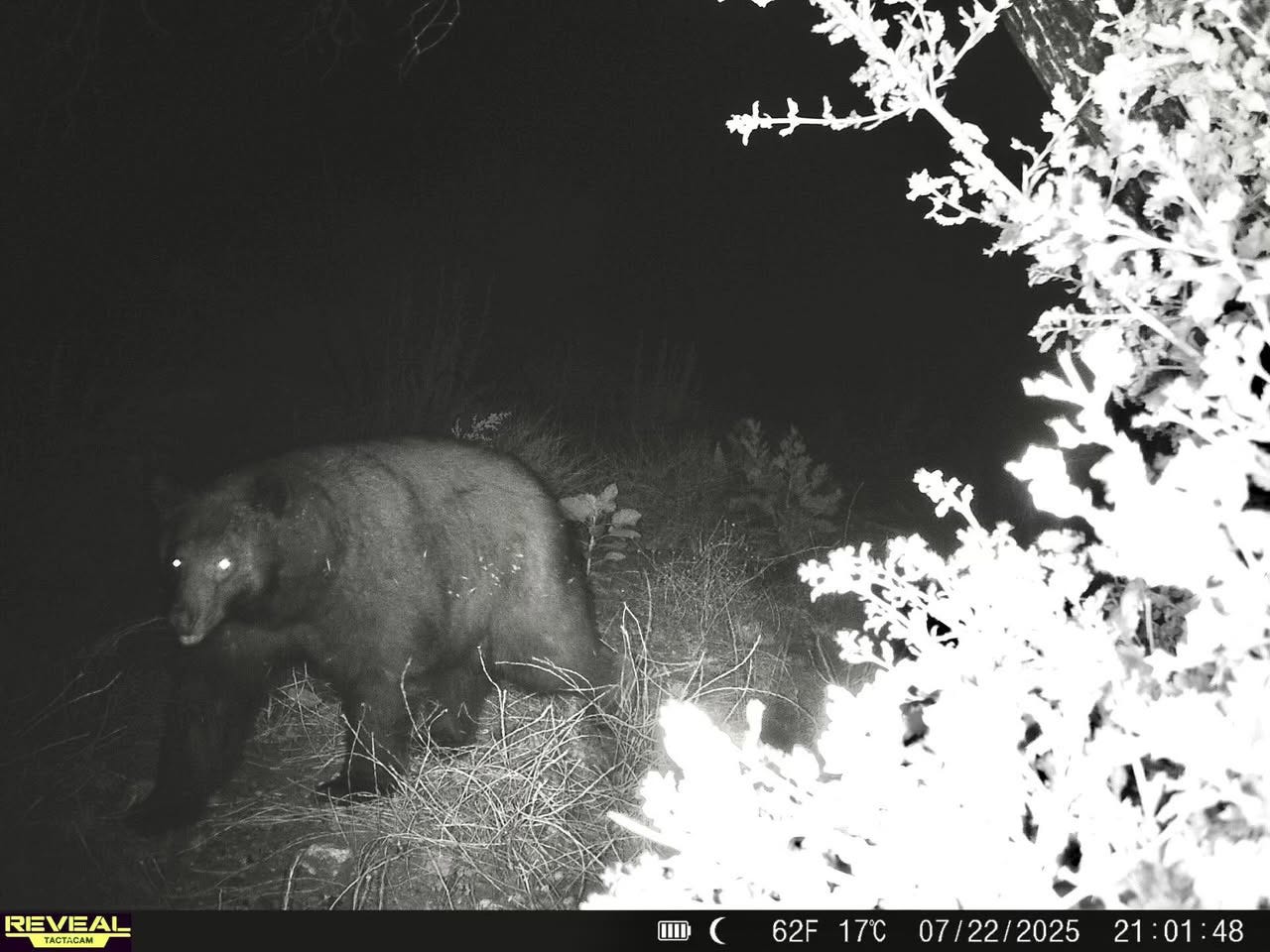
Then, on the six-month anniversary of the Eaton Fire, the American Black Bear returned [12]. By June, the majority of lots in Altadena had been cleared by the Army Corps of Engineers. A small handful of homes even broke ground on construction. The rest of us landed somewhere in the middle, paralyzed by the most daunting question:
“Are you rebuilding?” Are we? It’s not so simple.
Many insurance companies leave homeowners with no choice but to rebuild, while others have lost nearly their entire life savings and can’t afford either option. Some are dedicated to staying in Altadena. But at what cost?
Straddling an uncertain future and a paperwork-riddled present is overwhelming, to say the least.
But when I think about my community—how we drink in the mountains like a breath of fresh air—I know that each of us finds solace in the recovery of the natural world. This city of leaves, bees, and deer that we’re lucky enough to share our Altadena which has made strides in returning.
It goes beyond inspiration: as long as the wild is alive and well, the fabric of Altadena will always be intact.
Seedlings
Life begins in the soil and builds its way up. The only ones left to return now, it seems, is us.
As we rebuild Altadena, I hope we can take a page or two out of Mother Nature’s book. The ways in which these natural systems have ushered life back into the Altadena foothills tells us an incredible amount about the resources that are vital to re-establishing human communities after a crisis.
At its core, recovery comes down to appreciating and supporting the first responders, volunteers, and organizations dedicated to healing our community—including the Altadena NAACP, AltadenaWILD, Altadena Rotary, the Red Cross, and many more. Like deerweed and chamise, these groups are the critical foothold, instrumental to Altadena’s recovery, and it’s essential that they’re afforded the resources they need to continue working.
Ensuring support for these organizations comes down to federal funding.
As much as a neighborhood may rally for resources to uplift recovery organizations, rebuilding with integrity is impossible without governmental support.
This support is even more crucial when considering disparities in disasters — for example, what might work in a burnt suburb of Los Angeles might not work in a flooded region of Florida.
What will work, given these regional differences, is an unwavering commitment by the federal government to invest in these recovery hubs.
Focus even further: the cracks that exist in our federal aid system have allowed for members of the elderly, the disabled, or the multilingual to fall short of receiving the same aid.
But create systems that guide everyone through the steps following a disaster, and you guarantee that nobody —regardless of their age, primary language, address, or otherwise—will face barriers that diminish their ability to recover from such a loss.
And while across-the-board federal support could level many of the inequalities that exacerbate disasters, many of the hardest challenges that lie ahead for fire victims can’t be solved with any amount of money.
The handwritten cards are still lost. So are the backyard fruit trees, grandma’s paintings, and the view of the mountains.
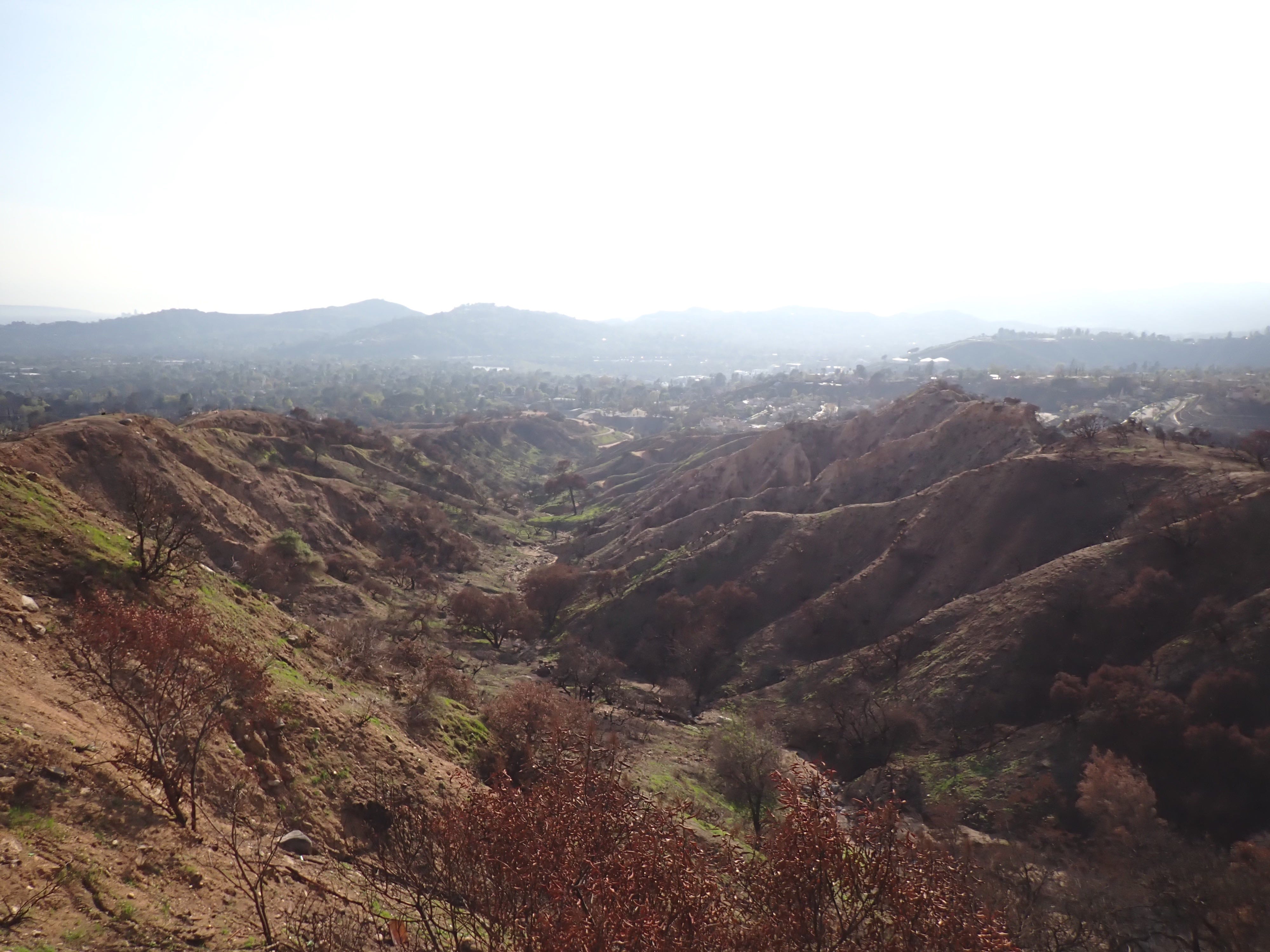
All this to say, the road to recovery is winding. For many, it may not have an end.
And yet…
If you’re anything like me, you’ll draw hope from the ladybug — from the resilience of nature. This is an ecological community that’s survived fires, floods, and changes in the landscape that predate the human race.
There’s a sort of infinite wisdom that resides in these ecosystems—and if we pay close enough attention, we might just be lucky enough to catch a glimpse of this history around us. It’s etched into the slope of the San Gabriels, woven into the fiber of every organism that we share these hills with.
So while the path forward may be shadowed in doubt and complication, I believe the first step is quite simple:
Look to the ladybug. Maybe, if we look close enough, it’ll point us in the right direction.